
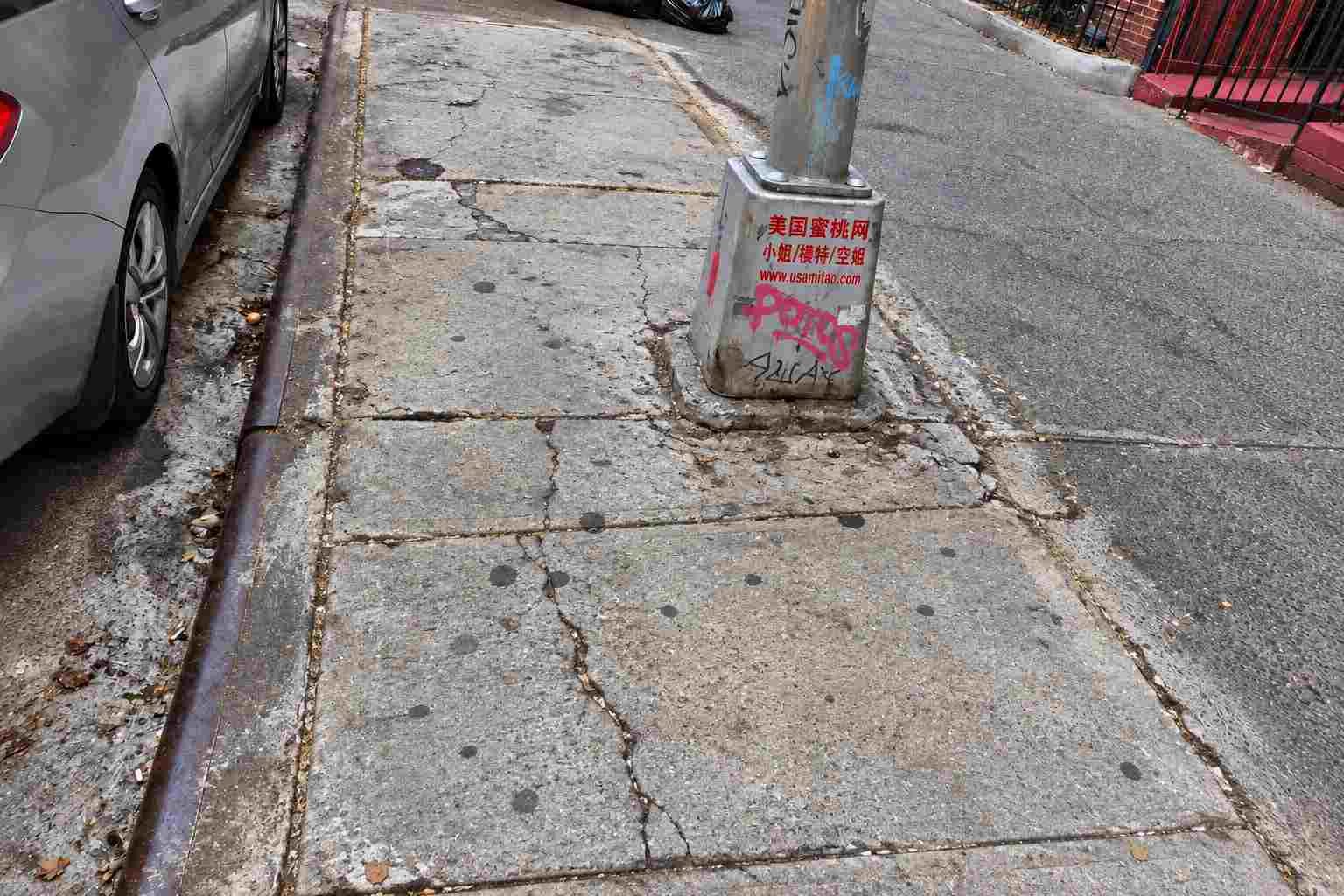
A 6-story elevator building with 52 residential units had accumulated a NYC DOT sidewalk violation after four concrete slabs along its street frontage deteriorated. With that many units, the sidewalk sees constant daily foot traffic from residents, deliveries, and visitors, and after decades of that wear, the slabs had cracked and settled enough to trigger a DOT violation notice.
For a building this size, an open sidewalk violation isn’t a compliance issue. It’s a liability exposure. Uneven or damaged slabs increase trip-and-fall risk for residents and guests, and an unresolved DOT violation can also complicate refinancing, insurance renewal, or a future sale of the property. The owner needed a contractor who could manage the entire violation-to-dismissal process, including permits, utility coordination, construction, and inspection without long disruptions to a fully occupied building.
Project Specifications
| Project | NYC Sidewalk Violation Removal and Concrete Slab Replacement |
|---|---|
| Location | 143-48 41st Ave, Flushing, NY 11355, a six-story residential apartment building in Flushing, Queens, with approximately 52 residential units. The building dates to 1935. |
| Property Type | Multi-family residential elevator apartment building |
| Sidewalk Damage | 4 damaged concrete slabs caused by constant pedestrian traffic and general wear and tear |
| Total Repair Area | Approximately 100 sq. ft. |
| Services Provided | NYC DOT sidewalk violation removal, removal of damaged concrete slabs, fresh concrete replacement, proper control joint installation, broom-finish application, and coordination of final DOT inspection and sign-off |
| Permits & Requirements | Sidewalk Construction Permit, Sidewalk Closing Permit, and 811 utility mark-out ticket |
| Project Cost | Approximately $3,200, including required permits |
| Project Timeline | Approximately 60 days, including permit coordination, concrete replacement, dismissal inspection, and final NYC DOT violation sign-off |
Step-by-Step Process Followed by Fixora Crew
Step 1: Violation Assessment & Scope Confirmation
Fixora NYC visited the property, cross-referenced the DOT violation notice against the actual sidewalk condition, and confirmed all four damaged slabs, totaling approximately 100 sq. ft. This on-site walkthrough also let our team flag the building’s layout, entrances, tree pits, curb cuts so the repair plan wouldn’t interfere with resident access during construction.
Step 2: Permit Filing & Utility Mark-Out
Our team filed for the Sidewalk Construction Permit and Sidewalk Closing Permit through NYC DOT and submitted an 811 utility mark-out ticket. The mark-out is a required waiting period where utility companies flag any gas, electric, water, or telecom lines beneath the work zone. Skipping this step is one of the most common reasons sidewalk jobs get delayed or fined mid-project. Since the property isn’t LPC-designated, no landmarks review was needed, which kept the permit chain to DOT alone.
Let us handle the permits, mark-out, and paperwork.
Fixora NYC files every required permit and coordinates the utility mark-out so your repair starts without delays or fines.
Step 3: Slab Removal
Once permits cleared and the mark-out confirmed no utility conflicts, crews broke out and removed the four damaged slabs. Work was staged to keep at least one clear, safe path open for residents and building staff at all times, given the building’s size and daily foot traffic.
Step 4: Concrete Replacement
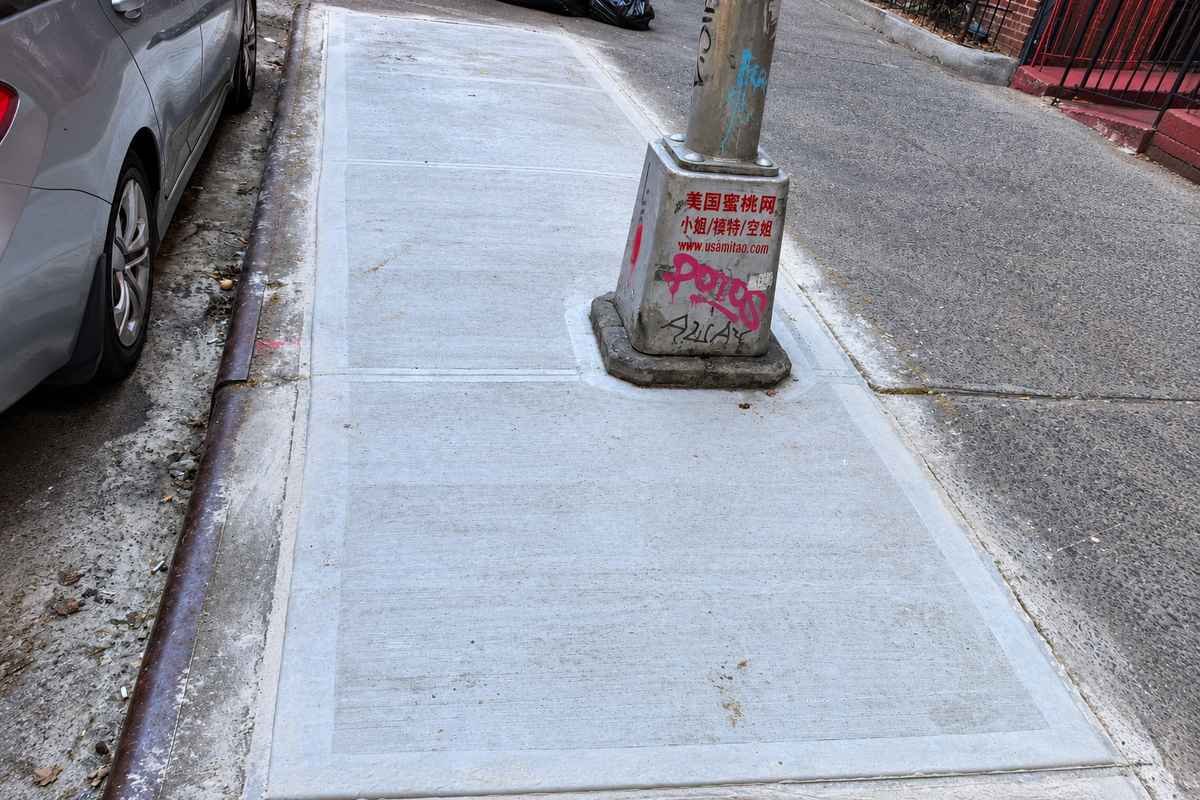
Fresh concrete was poured to NYC DOT specification. Control joints were installed at proper intervals to control future cracking from settling or freeze-thaw cycles, and a broom finish was applied across the surface, required by DOT for slip resistance on pedestrian sidewalks.
Step 5: Cure Time & Site Protection
The new concrete was barricaded and left to cure before reopening to full foot traffic, protecting the pour from damage during the critical curing window.
Step 6: Dismissal Inspection & DOT Sign-Off
Fixora NYC coordinated directly with NYC DOT for the final inspection, confirming the repair met code. DOT signed off, officially dismissing the original violation and closing out the building’s compliance record.
Client Review
“We’d been sitting on this violation for months, not knowing where to start. Fixora NYC handled everything, including the permits, the utility mark-out, the actual concrete work, and kept us updated the whole time. The sidewalk looks great, and DOT signed off without any back-and-forth. Painless process for a building our size.”
Property Manager, 143-48 41st Ave, Flushing
Why It Matters for Multi-Family Buildings
Buildings with dozens of units carry more sidewalk liability exposure than a single-family home, more feet crossing the same concrete every day means damage shows up faster and violations get flagged sooner. Handling the repair through a licensed contractor who manages permits, utility coordination, and DOT sign-off end-to-end helps building owners and property managers avoid repeat violations, reduce trip-hazard liability, and keep the building’s compliance record clean for insurance and resale purposes.
FAQs
Ready to Clear Your Sidewalk Violation?
If your building has an open NYC DOT sidewalk violation, Fixora NYC handles the entire process, from permits and utility coordination to concrete replacement and final DOT sign-off. Serving multi-family buildings across Queens and NYC.
Get a free violation assessment today at fixoranyc.com.