
The owners of a three-story single-family home on Argyle Road received a NYC DOT sidewalk violation after ten concrete slabs in front of their property broke down. Years of steady foot traffic had worn the surface, but the bigger cause was the mature street tree beside the house. Its roots had spread under the walkway and pushed several slabs upward, leaving raised edges, wide cracks, and uneven joints.
A tree-lined block like this one is a pleasure to live on, but the same trees are behind many Brooklyn sidewalk violations. The homeowners wanted the violation dismissed without harming the tree and without taking on the permit filings, utility coordination, and inspection scheduling themselves. They also wanted a repair that would hold up, not one that heaved again within a few seasons.
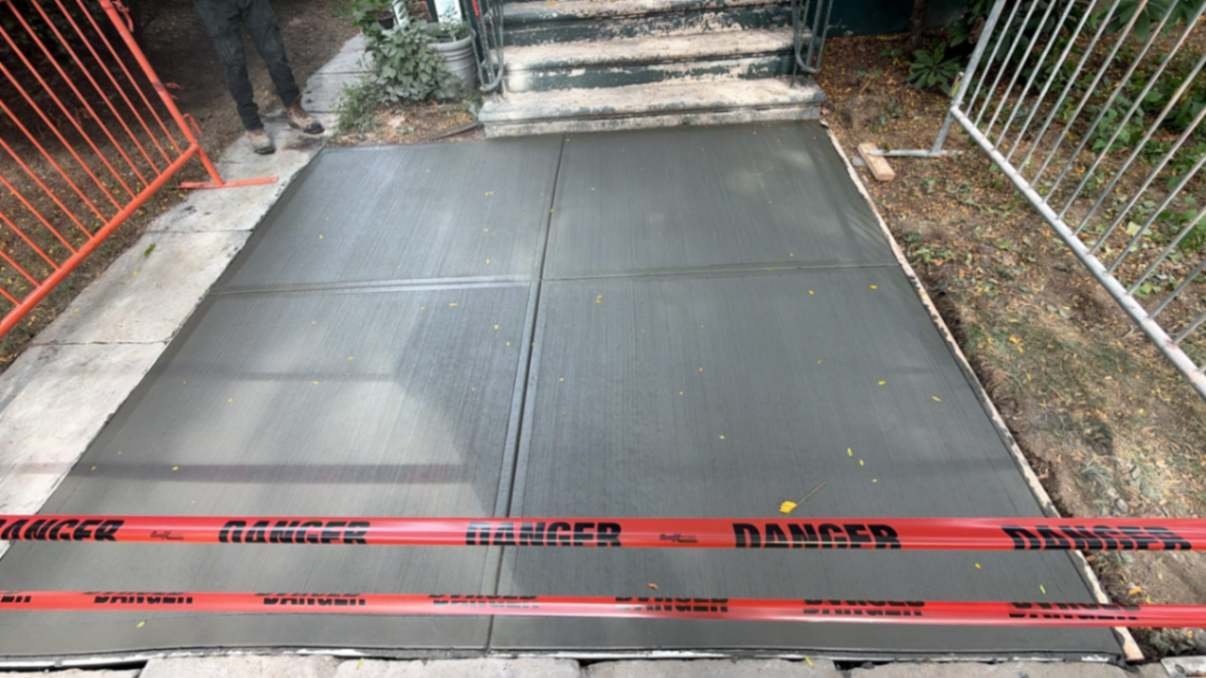
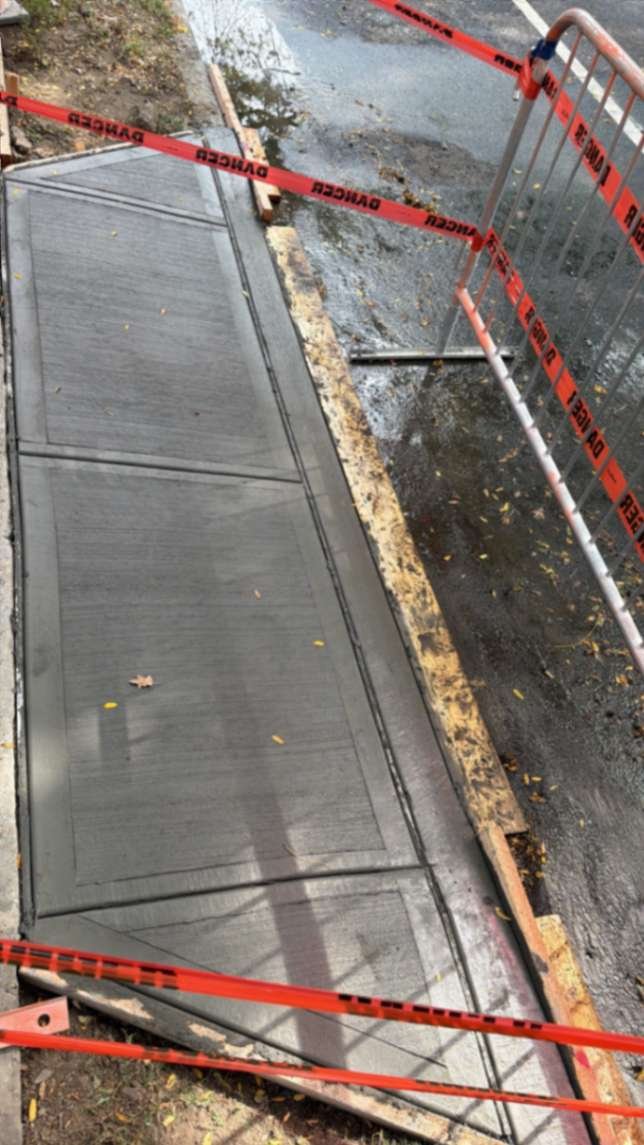
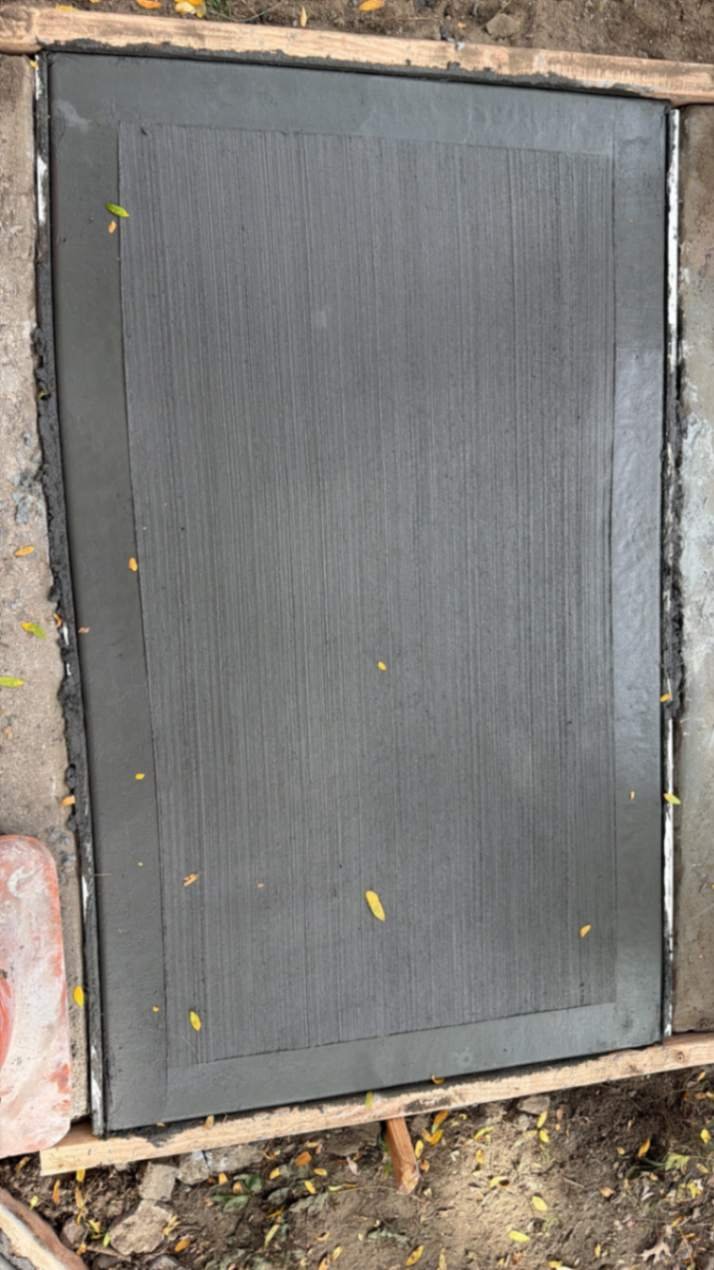
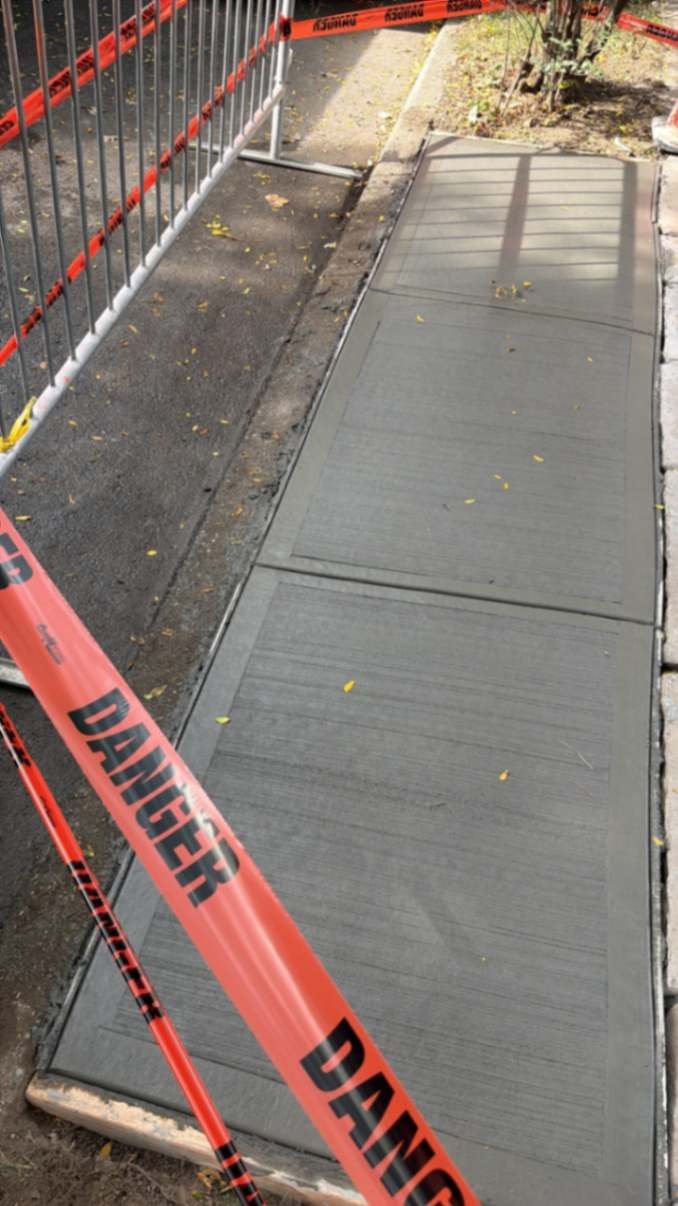
Project Specifications
| Project | Historic District Sidewalk Violation Removal and Sidewalk Restoration |
|---|---|
| Location | 243 Argyle Rd, Brooklyn, NY 11218. |
| Property Type | Three-story single-family home. |
| Sidewalk Damage | 10 damaged concrete slabs affected by constant pedestrian traffic, general wear and tear, and mature tree root growth. |
| Total Repair Area | Approximately 250 sq. ft. |
| Services Provided | NYC DOT sidewalk violation removal, damaged concrete slab removal, fresh concrete replacement, proper control joint installation, broom-finish application, authorized root pruning, root barrier installation, and coordination of the final NYC DOT inspection and violation sign-off. |
| Permits & Requirements | Sidewalk Construction Permit, Sidewalk Closing Permit, 811 utility mark-out ticket, and any applicable LPC approvals. |
| Project Cost | Approximately $5,800, including required permits. |
| Project Timeline | Approximately 60 days, including permit coordination, concrete replacement, inspection, and final NYC DOT violation sign-off. |
How Our Crew Handled the Repair, Step by Step
Step 1: Site Review and Violation Check
Our team walked the frontage with the DOT notice in hand and matched each cited defect to the actual slab. We confirmed ten damaged slabs across roughly 250 sq. ft. and traced the worst lifting back to the roots of the street tree. We also noted the driveway apron, the stoop, and the tree pit so the work plan would leave the family’s access intact.
Step 2: Permit Filing, Mark-Out, and Approval Check
We filed the Sidewalk Construction Permit and the Sidewalk Closing Permit with NYC DOT and requested an 811 utility mark-out. That mark-out is a mandatory waiting period in which utilities flag any buried gas, electric, water, or telecom lines in the work zone. We also checked whether any LPC approvals applied to the address and built them into the permit sequence so nothing would stall the job later.
Step 3: Slab Demolition and Root Exposure
Once the permits were in hand and the mark-out came back clear, the crew broke out and hauled away the ten damaged slabs. Removing the concrete exposed the root system underneath, which showed exactly where the roots had been lifting the walkway.
Step 4: Authorized Root Pruning and Barrier Installation
Street trees are protected, so the roots were not simply cut back. Any pruning was limited to what was authorized, and only where needed to lay a proper base. A root barrier was then installed along the edge of the walkway to steer future growth downward and away from the new concrete.
Step 5: New Concrete and Finishing
Fresh concrete was poured to NYC DOT specification. Control joints were cut at the right intervals to guide any future cracking into clean lines, and a broom finish was applied for slip resistance, as DOT requires on public sidewalks.
Step 6: Curing and Protecting the New Pour
The new slabs were barricaded and left to cure before reopening to foot traffic. That kept pedestrians, pets, and stray debris off the surface during the stage when fresh concrete is most vulnerable.
Step 7: Final Inspection and Violation Dismissal
Fixora NYC coordinated the final inspection with NYC DOT and confirmed the restored sidewalk met code. DOT signed off and the violation was dismissed.
Words of the Owner
“We had no idea a tree root could cause this much trouble until the violation showed up. Fixora NYC took care of the permits, the mark-out, the root work, and the inspection, and told us what was happening at every stage. The sidewalk looks new, the tree is still standing, and the violation is closed.”
Homeowner, 243 Argyle Rd, Brooklyn
Why Tree Roots Make Sidewalk Repairs Different
A sidewalk beside a mature tree fails differently from one that has simply worn down. Roots keep growing, so replacing the concrete without dealing with them often means the same slabs lift again. Because street trees are protected, the roots cannot just be cut out. Any pruning has to be authorized, and the repair has to be designed around the tree. A contractor who handles the permits, the root management, the barrier, and the DOT inspection as one job gives homeowners a repair that lasts and a clean violation record.
Homeowner Questions About This Brooklyn Sidewalk Repair
Don’t Let a DOT Violation Sit Unresolved
Open sidewalk violations don’t go away on their own, and root-related damage tends to get worse each season. Fixora NYC takes the paperwork, utility coordination, root management, and inspection off your plate, so you get a clean record without the runaround. We serve homeowners and building owners across Brooklyn and all of NYC. Contact us today to book a free assessment for your Brooklyn sidewalk.