
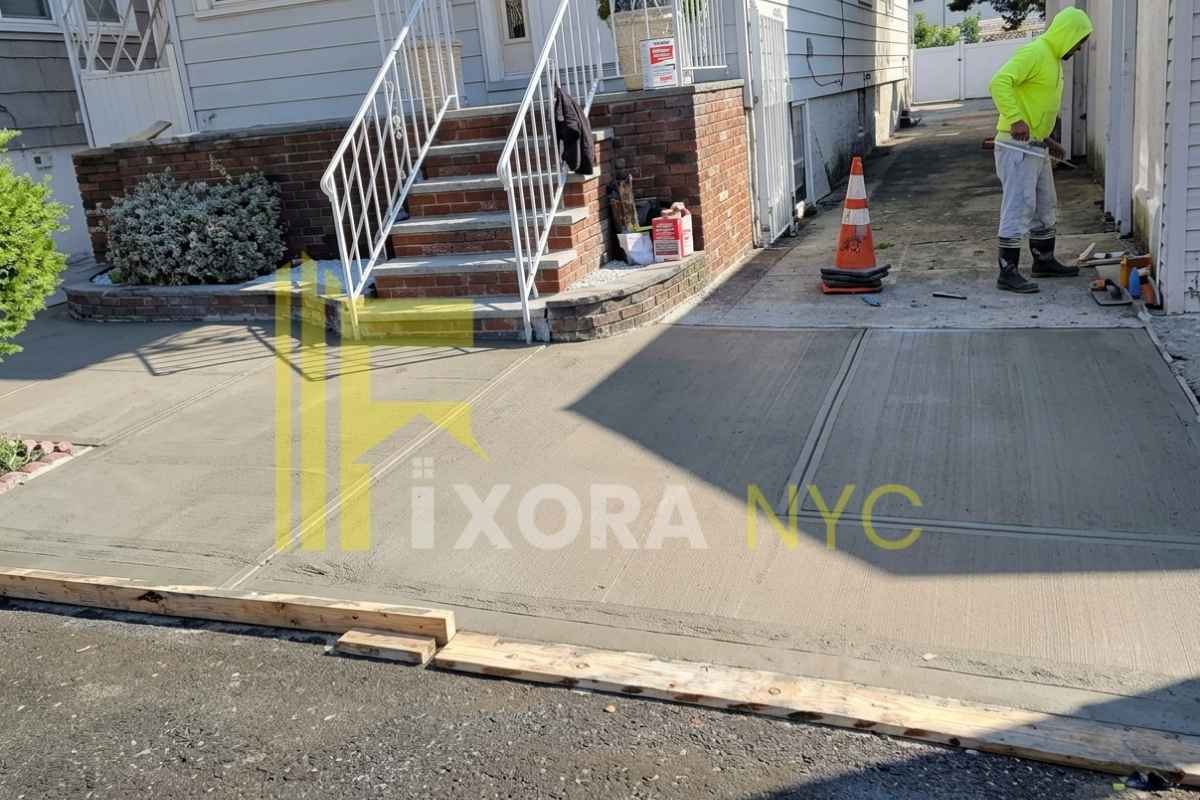
Common Causes of NYC Sidewalk Cracks & How to Fix Them
Cracked sidewalks are one of the most common headaches for NYC property owners, and the reason so many homeowners stay stuck in a cycle of repair and re-repair is simple, because they're treating the symptom, not the disease. A bag of concrete filler from the hardware store isn't going to fix a root system that's been pushing against your sidewalk for a decade. And slapping a patch on a slab that's sinking due to soil erosion is about as useful as putting a bandage on a broken bone.
What makes this especially urgent in New York City is that cracked sidewalks aren't only a cosmetic issue. Under NYC law, property owners are typically responsible for maintaining the sidewalk adjacent to their property. That means a neglected crack can escalate into a DOT violation, a fine, and, worse, a liability nightmare if someone trips and falls. The city takes this seriously, and so should you.
So before you reach for that patch kit again, let's talk about what's actually causing your sidewalk to crack and what it takes to actually fix it for good.
Tree Root Damage
Walk through almost any older neighborhood in Brooklyn, Queens, or the Bronx, and you'll see it: sidewalk slabs tilted at odd angles, raised edges, and long horizontal fractures running parallel to the curb. Chances are, there's a tree root behind it.
Tree roots grow outward, sometimes aggressively in search of moisture and nutrients. When a sidewalk sits directly over their path, roots don't stop or redirect. They push up. That upward pressure is slow but relentless, and it will win eventually no matter how thick the concrete above it is.
The telltale signs of root-related damage include raised or buckled slabs, long cracks running horizontally near tree bases, and sections of sidewalk that appear to be pushing upward. If you notice any of these, patching the surface without addressing the root system underneath is essentially pointless. The roots will keep growing, and the new patch will crack just as the old one did.
Here’s how you can fix tree root damage
Long-term fixes here depend on the severity. Root pruning by a certified arborist can redirect growth in some cases. More extensive situations may call for a full sidewalk redesign that accommodates the tree, using flexible paving materials, tree grates, or a wider planting bed. If the slab needs full replacement, a good contractor will ensure the new pour is DOT-compliant and accounts for root pressure going forward.
One important note: NYC's street trees belong to the city, and you can't just remove or severely prune them without going through the Parks Department. So, it's crucial to bring a certified contractor who understands the city's regulations around street trees while having professional know-how about the permit filing process and coordinating with city officials. It will save you a major headache.
Freeze-Thaw Cycles
New York winters are brutal in ways that go far beyond what you can see. Every time temperatures drop below freezing, any water that has seeped into your sidewalk's surface pores and tiny cracks expands. Since the water expands by about 9% when it freezes. That's an enormous amount of force applied to an already stressed slab.
When temperatures rise and the water thaws, it contracts again. Then it freezes again. And thaws again. This freeze-thaw cycle, repeated dozens of times over a single winter, gradually pries concrete apart from the inside out.
NYC sidewalks face a particularly punishing version of this problem. Harsh winters, frequent temperature swings between day and night, and the widespread use of road salts and de-icing chemicals all accelerate concrete deterioration. Salt lowers the freezing point of water, which sounds helpful, but it actually causes the freeze-thaw cycle to occur more frequently and penetrates the concrete surface, weakening it over time.
The best defense here is prevention. Patching hairline cracks and applying a penetrating concrete sealer before winter locks out moisture so it can't get into the slab in the first place. Addressing any existing deeper cracks promptly before temperatures drop keeps water from getting a foothold. And when it comes to ice removal, consider using sand or a concrete-safe deicer rather than rock salt whenever possible.
Poor Concrete Installation
Not all concrete jobs are created equal, and unfortunately, a sidewalk that was installed with corners cut is going to show you those corners sooner than you'd like.
Common installation mistakes that lead to chronic cracking include using a weak concrete mix that has a lower PSI rating than standard while adding too much water to make the pour easier to work with (which weakens the final product significantly), as well as skipping reinforcing materials like wire mesh or rebar, rushing the curing process, and most critically, failing to properly prepare the base layer underneath.
If your sidewalk started cracking within the first year or two after installation, or if you're seeing surface flaking, scaling, or uneven settlement happening early, poor installation is likely the culprit. Surface scaling, where the top layer of concrete flakes off in sheets is almost always a sign that the mix was wrong or the curing was rushed.
Professional contractors prevent these issues by taking the time to properly compact and prepare the sub-base before any concrete is poured, incorporating correctly spaced expansion joints, using the right concrete mix for the application, and allowing adequate curing time. In NYC, DOT-compliant installations also require specific concrete thickness standards, another reason to hire someone who knows the local code, not just general construction.
Soil Movement and Ground Settlement
Concrete is only as stable as the ground it sits on. When the soil underneath a sidewalk shifts, settles, or erodes, the slab above loses support, and unsupported concrete cracks.
In New York City, this is a particularly complex issue. The city sits on a mix of soil types, some of which are more prone to shifting than others. Underground voids from aging infrastructure, old utility lines, deteriorating pipes, and decades-old drainage systems all can create pockets beneath sidewalks that cause slabs to sink or tilt over time. Nearby construction is another big factor; vibrations from heavy equipment can destabilize the soil under your sidewalk even if the work is happening half a block away.
The signs of settlement damage look different from crack-only damage. You'll typically see sunken slabs, meaning the sections that have dropped lower than the surrounding concrete, as well as cracks that radiate outward from the corners of a slab and walking surfaces that feel uneven or bouncy underfoot.
Fixing settlement damage means addressing the root cause before laying new concrete. That might mean stabilizing the base, correcting drainage issues that are causing erosion, or filling underground voids before a replacement slab is poured. Skip this step and the new slab will settle the same way the old one did.
Heavy Loads and Excessive Pressure
Here's something NYC sidewalks deal with that suburban ones largely don't: constant, heavy, varied traffic. Delivery trucks routinely roll onto sidewalks to unload. Construction equipment sits on them for weeks at a time. Moving crews park vehicles on them. Garbage trucks clip them. None of this is what residential sidewalk concrete was engineered to handle.
Concrete has a compressive strength limit, and the residential sidewalks are just for normal foot traffic with approx. 4 inches of thickness. When loads repeatedly exceed what it was designed for, stress fractures form and spread. Once the structural integrity of a slab is compromised, it doesn't take much to push it from cracked to collapsed.
In areas where heavy vehicle access is unavoidable, reinforced concrete, using thicker slabs and additional rebar or mesh, can significantly extend the lifespan of a sidewalk. Protective bollards or barriers can also help prevent vehicles from accessing areas where they shouldn't be. If you're planning a renovation or have contractors on-site for an extended period, it's worth having a conversation upfront about protecting your sidewalk from equipment traffic.
Water Drainage Problems
Water finds its way into everything, and concrete is no exception. But it's not just the water that gets into the concrete that causes problems, but also the water that pools around and beneath it.
When a sidewalk doesn't have adequate slope to direct water away, standing water accumulates and slowly saturates the sub-base. Over time, that saturated soil weakens, shifts, and erodes, taking the structural support away from the concrete above it. Add NYC's frequent rain events and occasional flooding into the mix, and you've got a recipe for accelerated deterioration.
Common drainage culprits include an improperly sloped sidewalk surface, gutters that overflow and dump water directly onto the pavement, and downspouts that drain toward rather than away from paved surfaces. These are all fixable issues, but they need to be corrected before or alongside any concrete repair. Otherwise, you're pouring new concrete into the same draining conditions that destroyed the last batch.
Solutions include regrading the sidewalk surface with the help of experienced sidewalk pros to ensure proper runoff, redirecting downspouts and gutters, and, in some cases, installing French drains or other drainage infrastructure to manage water accumulation at the source.
Lack of Regular Maintenance
This one is on us. It's easy to walk past a small crack every day and tell yourself you'll deal with it later. But concrete cracks don't stay small on their own. They grow, particularly in a climate like New York's, where moisture, temperature swings, and heavy foot traffic are relentlessly working on them.
A hairline crack that costs next to nothing to seal this fall can, by next spring, be a wide structural fracture that requires section replacement. Weeds and grass push their way in and widen gaps from the inside. Dirt traps moisture. Every winter makes it worse.
Regular maintenance, a quick seasonal inspection by an expert eye, prompt sealing of any new cracks, and occasional pressure washing to keep the surface clear are genuinely some of the most cost-effective things you can do as a property owner. It takes very little time and catches problems before they become expensive.
Why You Really Can't Afford to Ignore Sidewalk Cracks
It might be tempting to think of a small crack as purely cosmetic, something to deal with eventually, when there's time and budget. But here's the thing: in New York City, "eventually" has a way of turning into "too late."
What starts as a hairline fracture can widen fast. Water gets in, freezes, expands, and forces the gap apart a little more with every cold snap. Dirt and weeds move in. The slab starts to shift. What was a $200 repair becomes a $3,000 full replacement, and that's before any DOT fines enter the picture.
Beyond the financial hit, there's the very real safety issue. Uneven or raised sidewalk slabs are one of the leading causes of trip-and-fall accidents, and in a city with the pedestrian traffic of New York, the odds of someone stumbling over your problem slab are not in your favor. NYC property owners have faced significant legal liability for injuries caused by neglected sidewalks.
And yes, it affects your curb appeal and property value too. A crumbling sidewalk is one of the first things prospective buyers, or even prospective renters, notice. First impressions matter, and concrete tells a story.
DIY Patch vs. Professional Repair
There's a time and place for grabbing a tube of concrete caulk or a bag of patching compound. For a fresh hairline crack or a small surface chip, a DIY repair is reasonable, affordable, and effective as long as you prep the surface properly (clean it out thoroughly, remove all loose debris and dust, let it dry completely) and use a product appropriate for exterior conditions.
But most recurring sidewalk cracks are not candidates for DIY fixes. If the crack keeps coming back, if there are multiple cracks spreading across a slab, if you're seeing settlement or lifting, or if you've already patched it twice, then the problem is structural, and structural problems need structural solutions.
Professional repairs go further than surface work. A qualified sidewalk contractor will evaluate soil conditions, look for evidence of root intrusion or drainage issues, assess the condition of the sub-base, and make a recommendation that actually addresses the underlying cause. The work will also be done to DOT code, which matters enormously in NYC, while shoddy repairs that don't meet city standards can still result in violations.
The cost comparison is worth thinking about, too. Repeatedly patching a problem sidewalk can add up fast, and each patch job gives you only temporary relief. A proper professional repair or replacement, done right the first time, is almost always the more economical choice over a five-year window.
When It's Time to Stop Repairing and Just Replace
At some point, a sidewalk crosses a threshold where repair no longer makes sense. Knowing when you've reached that point can save you a lot of money and frustration.
It's time to think seriously about full sidewalk replacement when you're dealing with multiple cracks spreading across a large area, significant unevenness or lifting between slabs, widespread surface deterioration or scaling, large sections that have sunken or tilted, or if you've received recurring DOT violations for the same stretch of sidewalk.
Replacement isn't the worst outcome, but it's actually an opportunity. A new, properly installed sidewalk with the right sub-base preparation, appropriate reinforcement, and correctly spaced expansion joints will last for decades with minimal issues. The key is making sure the underlying problems (drainage, roots, soil stability) are addressed before the new concrete goes down.
Smart Ways to Prevent Future Sidewalk Cracks
You can't control NYC's winters or stop the city's trees from growing. But you can take steps that significantly reduce the odds of recurring damage.
- Redirect water away from your sidewalk. Check that your downspouts drain away from paved surfaces, and make sure gutters are clear and functioning. Standing water is concrete's worst enemy.
- Seal your concrete before every winter. A penetrating concrete sealer applied in the fall blocks moisture from getting into the slab, dramatically reducing freeze-thaw damage. It's inexpensive and takes an afternoon.
- Address cracks the moment you see them. A small crack sealed promptly with a quality concrete caulk is a five-minute, ten-dollar fix. Left alone, that same crack will cost you significantly more.
- Avoid heavy loads on your sidewalk. If you know contractors are coming, talk upfront about equipment placement. Use plywood or protective mats under heavy equipment when possible.
- Schedule an annual inspection. A quick look every spring, after the freeze-thaw season has done its worst, can catch new issues early.
- Hire experienced, licensed contractors for any major work. In NYC, sidewalk repairs need to be done to DOT specifications. A contractor who knows the local code and whose work will hold up to a city inspection is worth the investment.
Conclusion
Sidewalk cracks keep coming back because most repairs treat what you can see, not what's causing it. Tree roots, freeze-thaw cycles, drainage problems, poor installation, and soil movement are the real villains, and no amount of surface patching addresses them.
Understanding the cause of your specific problem is the most valuable thing you can do before spending a dollar on repairs. And acting early, before a small crack becomes a sunken slab, a DOT violation, or a liability claim, will save you more money than you'd expect.
Your sidewalk is more than a path to your front door. In New York City, it's your responsibility. Taking care of it isn't just good property ownership, but it's how you protect your investment, your neighbors, and anyone walking by. If you're dealing with recurring cracks and you're ready for a fix that actually sticks, reach out to a licensed and insured local sidewalk contractor for a proper assessment and the best solution suited to your property.